
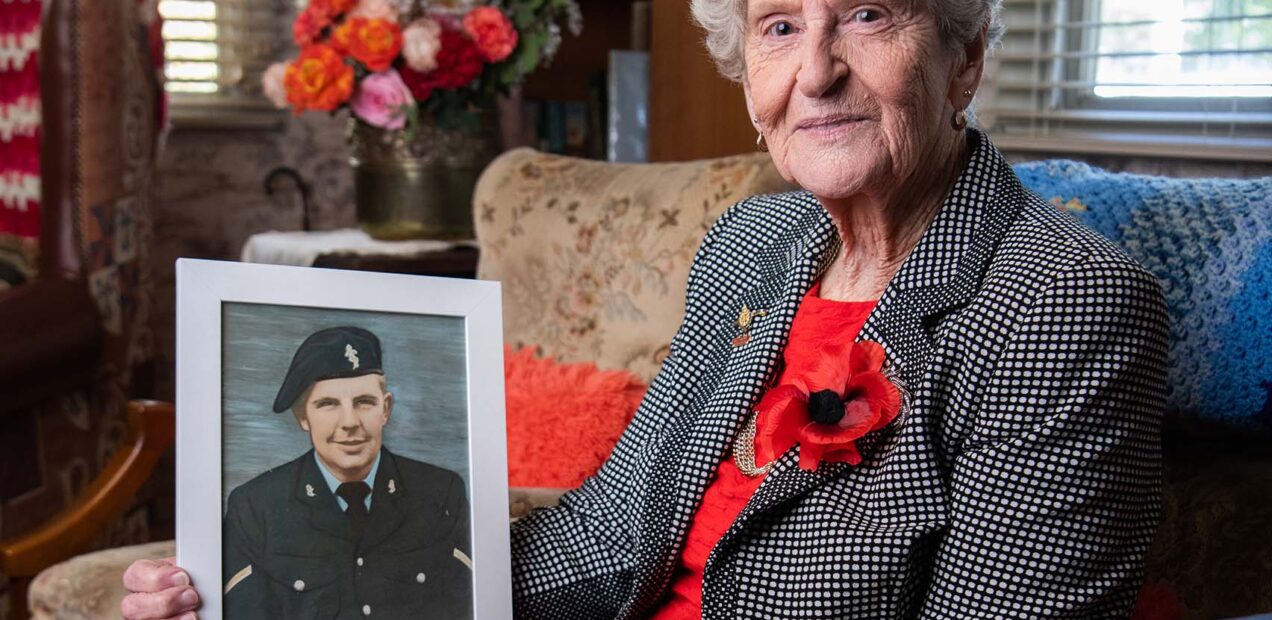
Elizabeth was just 38 when her world changed forever. Her husband Barry, a returned Vietnam War veteran, died suddenly of a heart attack—leaving her a widow and the sole parent of four young children. More than five decades later, Elizabeth still vividly recalls the shock and heartbreak of losing Barry so unexpectedly.
“Barry had a massive heart attack. We never expected it. He had no long-term health problems and was otherwise a healthy person,” Elizabeth shares.
“He made it back safely from Vietnam. He wasn’t injured. For 18 months or so he was home, then he just had this collapse, and he was gone.”
At the time, Elizabeth’s oldest child was fifteen and her youngest had just turned three. The Department of Veterans’ Affairs did not initially recognise her as a war widow, and she was left to support her family without financial assistance.
“I was too young for a pension card, so I was paying full price for everything and supporting four children… but Legacy intervened on my behalf and eventually got the war widow’s pension for me.”
Just three weeks after Barry’s death, Elizabeth’s father—also a returned serviceman—passed away. She and her mother found themselves grieving side by side.
“Without Legacy, I would have been worried all the time. To know that someone’s around when you need them is half the battle.”
Legacy became Elizabeth’s second home. For nearly 50 years, she has found comfort, connection, and community through Legacy’s social programs for widows.
“I had never belonged to a club before and it was very interesting, I enjoyed it. It was a whole new world for me that was different from the kitchen sink. If I had a problem, I knew that I could talk it over with any of the Legatees. That’s been the same ever since… and I’ve been coming into Legacy at least twice a week for 48 years!”
Back in the 1970s, Elizabeth recalls the vibrant gatherings of up to 50 women, sharing morning tea, lunch, and activities like sewing, knitting, dressmaking, and carpet bowls.
“Legacy gave us an outlet and that helped us to be mentally happy, which also had a positive impact on my children. Legacy was home away from home. My second home. My second family.”
Today, Elderly War Widows across Queensland like Elizabeth continue to find strength and solidarity among fellow widows thanks to an additional grant from the Eastern Star Foundation this year of $91,998 to the Legacy Club of Brisbane, marking the first year of a three-year funding arrangement (reviewed annually). Last year, the organisation also received a $60,000 grant from the Foundation, reinforcing its commitment to supporting widows and families of veterans.
This grant is providing a lifeline for Widows like Elizabeth by supporting Legacy club of Brisbane’s complex case management services, enabling personalised care plans tailored to each widow’s unique needs; sustaining 40 Laurel Socialisation Clubs, which serve over 400 elderly members, offering vital opportunities for social connection and peer support; and funding an external review of Legacy’s program, focused on Vietnam War Widows, ensuring services remain relevant and effective.
“It’s always helped me to be around others who were in the same position. We talk. I learn from them. We understand each other. The weeks I don’t come in, I’m lost,” said Elizabeth.
Eastern Star Foundation Chair Jonathan Nantes said the funding reflects the Foundation’s mission to uplift ageing communities.
“We are committed to empowering those who enrich the lives of our ageing communities,” Mr Nantes said.
“We are proud to back Legacy Brisbane in its vital work helping war widows remain socially connected, emotionally supported, and able to live with dignity and independence.”
Elizabeth’s story is a powerful reminder of the enduring impact of Legacy’s work—and why continued funding is essential to ensure no war widow faces life alone.

